
INTRODUCTION
I grew up surrounded by cameras. My dad kept a stash of them at home, though I was never allowed to touch them. My first real experience with 35mm film came in college, and I loved it, but I drifted into video work and left still photography behind.
Strangely, it was the iPhone that brought me back; suddenly, I had a camera with me everywhere, and the act of making images became part of my daily life again. Years later, a friend handed me a bag of old Nikon SLRs and lenses. I took them reluctantly, fully committed to digital at the time, but the moment I held one of those analog beasts, everything shifted—the weight, the smell of the leather, the mechanical click of the shutter. I fell in love all over again. That rediscovery of film now shapes my practice, grounding my work in patience, texture, and the quiet magic of the analog process.
FORMAT & PROCESS
What draws you to analog film and multiple exposures?
I'm drawn to analog formats because they slow me down and make me more intentional. Shooting 35mm film, especially with older Nikon SLRs, forces me to pay attention to light, timing, and instinct in a way digital never did. I love the physicality of the process: the weight of the camera, the tension of winding the film, the quiet uncertainty of not knowing exactly what I've made until it's developed.
Film introduces a kind of honesty and imperfection that feels closer to how memory works. In particular, multiple exposures allow me to explore those in-between moments where scenes overlap, and emotions blur. The process is tactile, unpredictable, and deeply grounding, and that's exactly what keeps me returning to it.
CURRENT WORK
Can you tell us about what you're currently working on or a recent project you've developed?
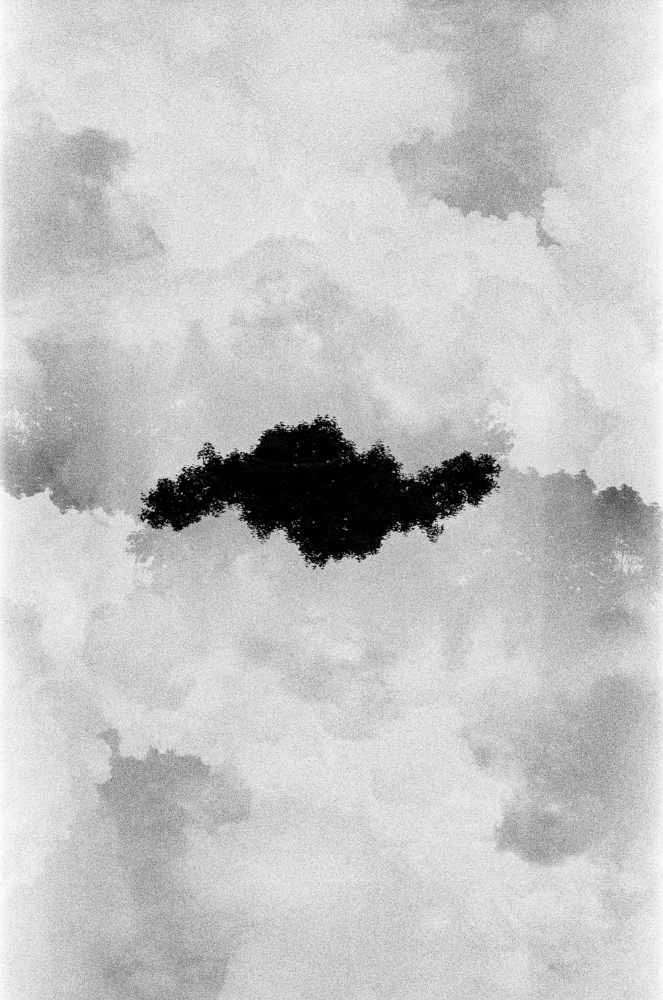
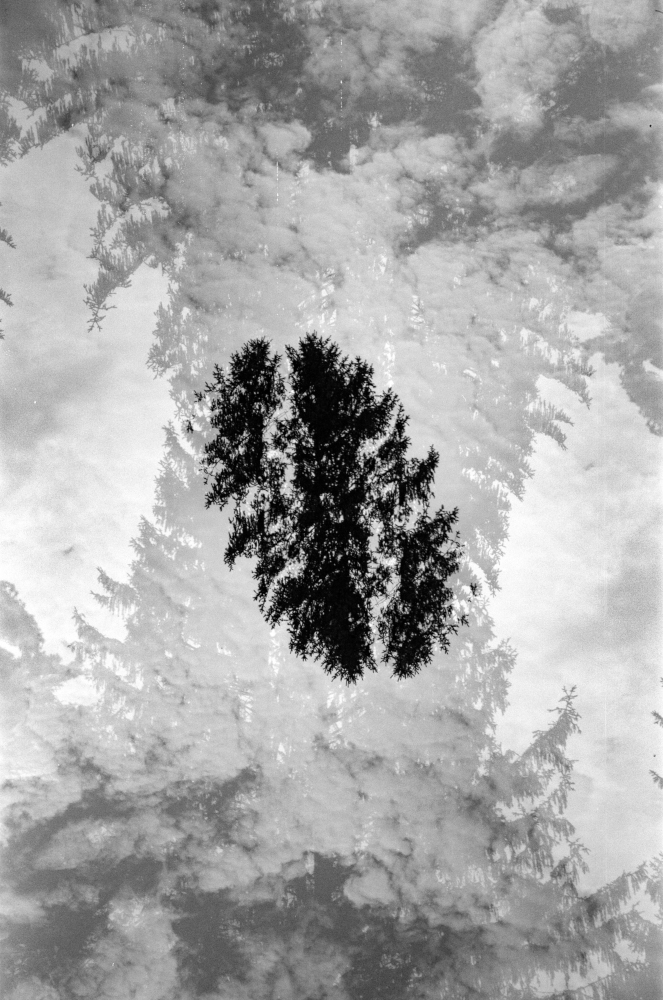
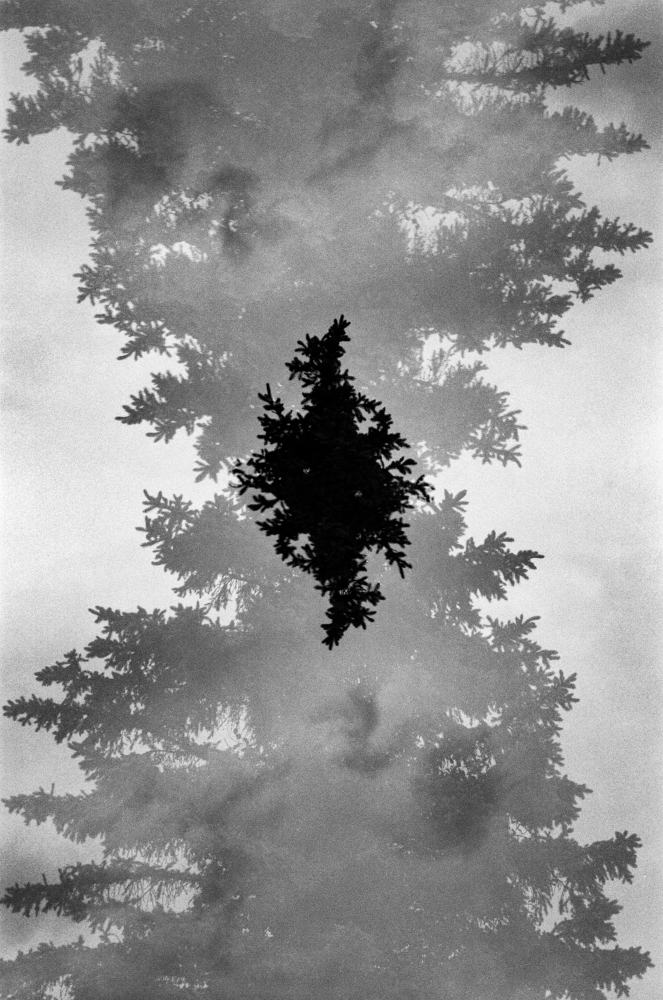
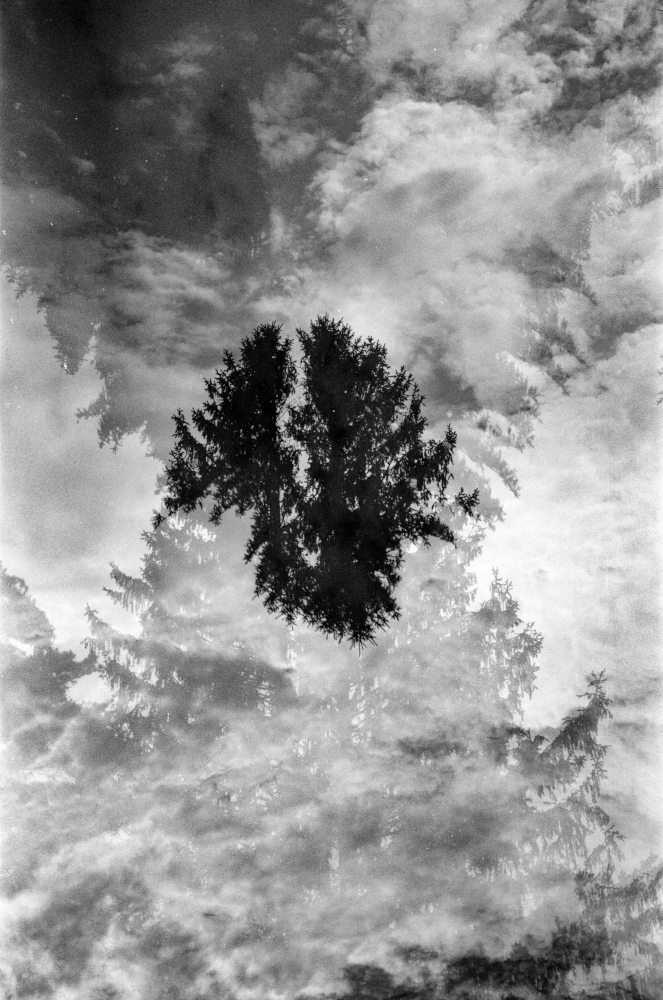
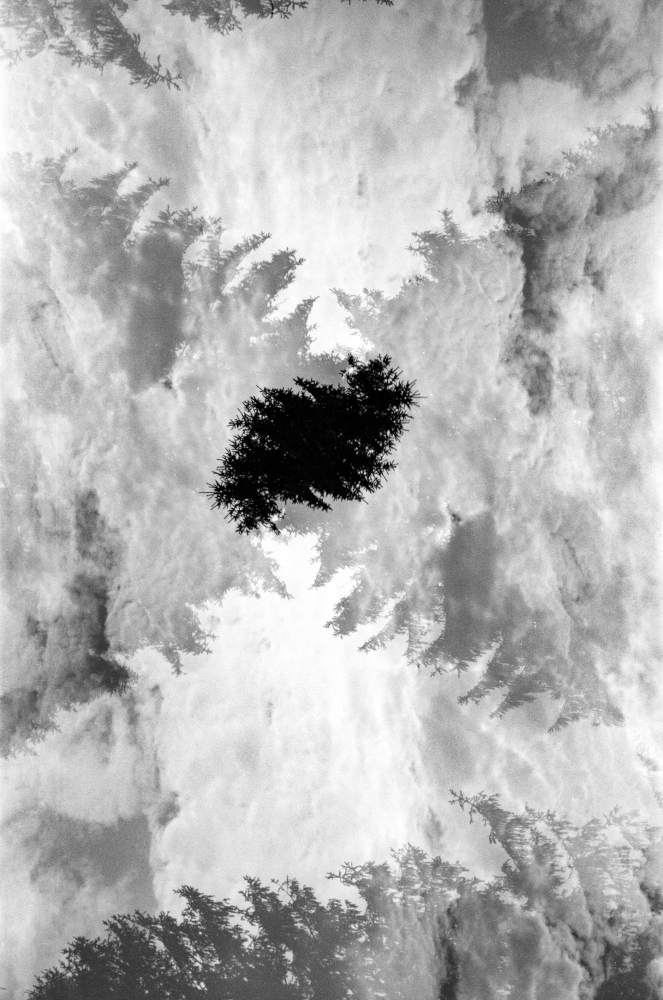
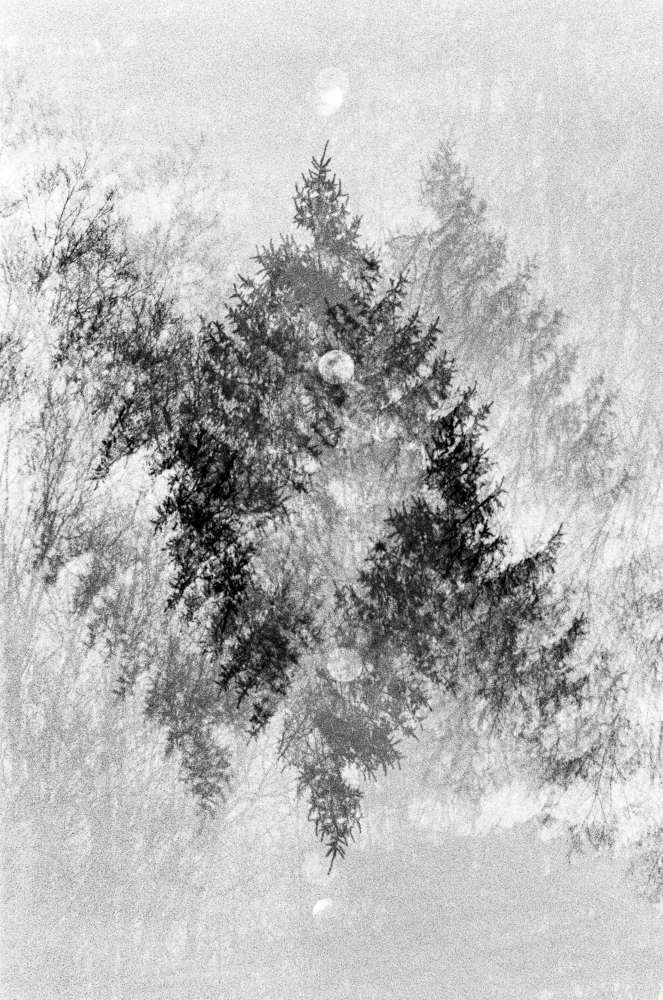
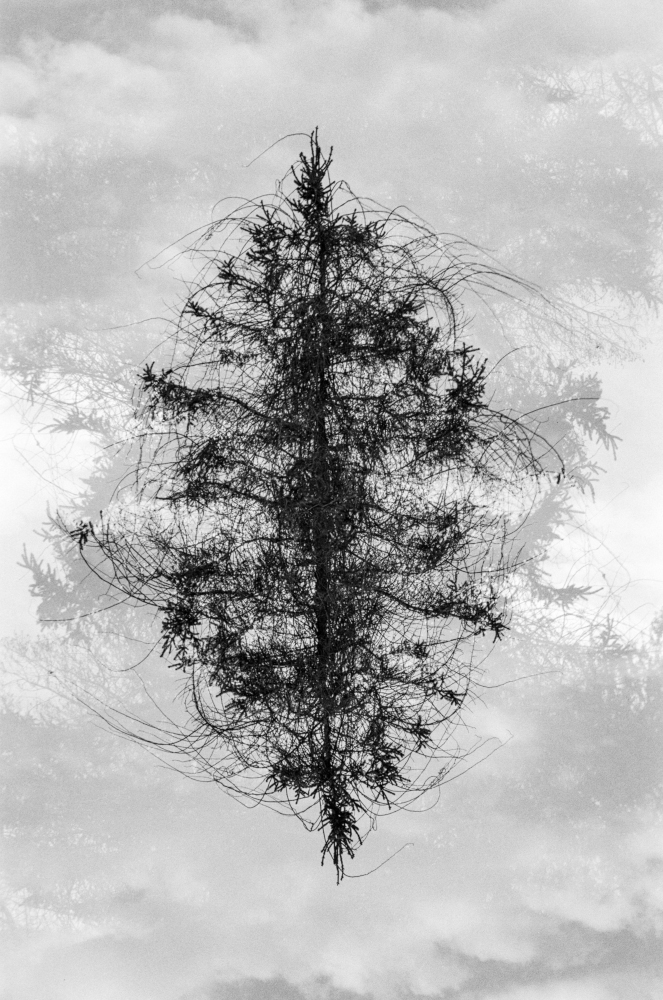
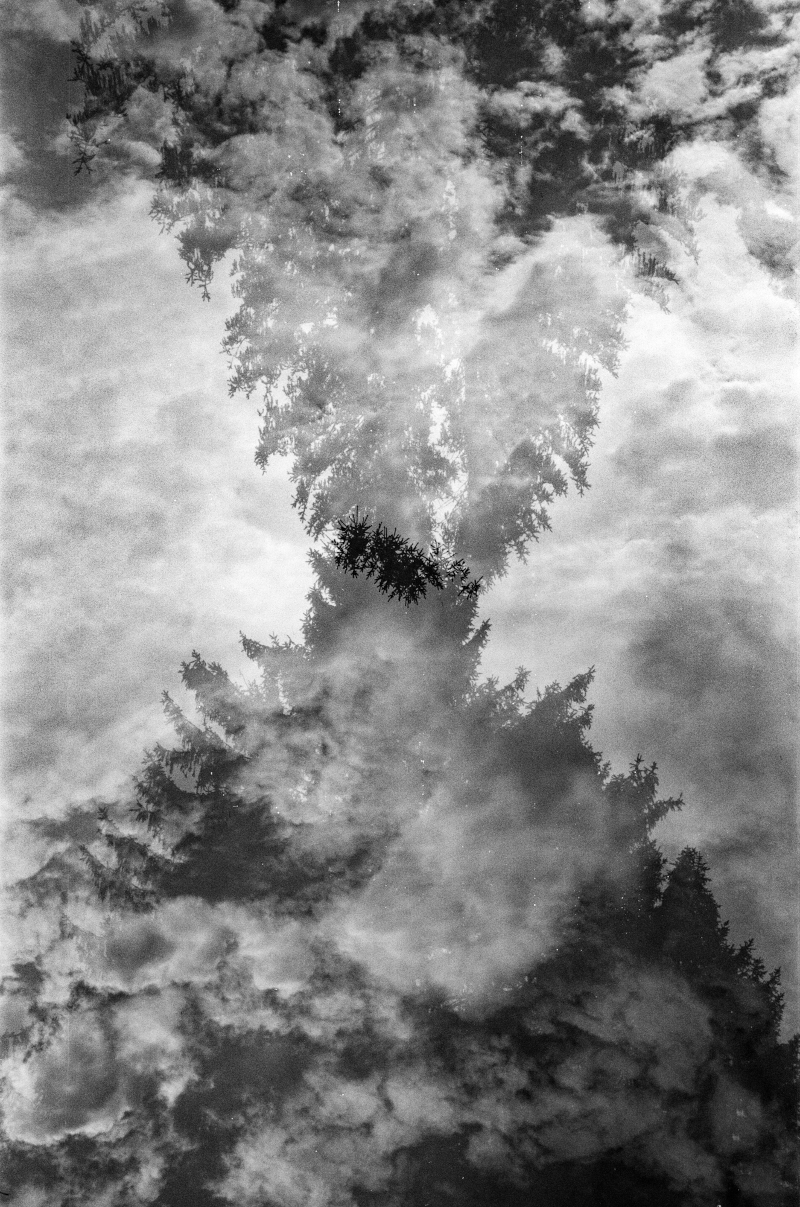
Currently, I'm focused on an ongoing series called The In-Between, a 35mm project exploring the quiet tension of liminal spaces in nature. Using in-camera multiple exposures, I layer trees, branches, and organic forms to create images that blur the line between reality and memory. The series is about the subtle transitions we often overlook, the spaces between growth and decay, stillness and change. It's a project that evolves with each roll of film, shaped as much by intuition and chance as by intention, and I plan to continue expanding it as I keep exploring these quiet, transformative natural moments.
CREATIVE VISION
How did your tools shape your creative direction?
I try not to let equipment get in the way of creativity. Most of the cameras I use were a gift from a friend after his aunt passed away, so I didn't get to choose the gear. I simply dove into what I was given. In that bag was a Nikon FM10, a straightforward, no-frills camera that just so happens to make multiple exposures incredibly easy.
That simplicity shaped my vision. Instead of chasing the "right" tool, I let the tools I had guide me toward a process I grew to love. The FM10's limitations became part of my creative language, and working within them opened up a more intuitive, hands-on way of seeing. It reinforced the idea that vision leads, and the equipment follows.
INSPIRATION
Where do you find inspiration for your work?
Most of my inspiration comes from simply watching the light outside my back window. When something shifts, a glow, a shadow, a sudden break in the clouds, I step outside and follow it. I joke that I'm a lazy photographer, but really, it's that I'm drawn to what naturally unfolds around me. Changing weather, shifting seasons, and the subtle ways light moves through trees are what keep me creating. I'm motivated by those quiet moments that ask to be noticed, and film gives me a way to hold onto them before they disappear.
ADVICE
What advice would you give to someone just starting to explore the medium you use?
Keep shooting, no matter what the medium. The most important thing is to stay curious and keep that creative buzz alive. Don't wait for the perfect camera or the perfect moment; just make images and pay attention to what excites you. For me, repetition is what leads to growth. The more you shoot, the more you learn how you see, and the more confident you become in your own visual language. Keep exploring. Keep experimenting. Let the process teach you.
FUTURE DREAMS
Where do you see your practice going? Any dreams or directions for the future?
I'd love to see the project grow into something tangible, such as a book, a show, or some kind of publication where the images live together and tell a larger story. That would be incredible for the ego, sure, but more than that, I just want to keep making photographs and sharing them however I can. My biggest hope is simply that the practice continues, that I stay connected to the process, and that the work continues to find people who respond to it. The rest will come if it's meant to.
QUICK FIRE
Tea or coffee?
Coffee.
Early bird or night owl?
Night owl.
Analog or digital?
Both.
Music or silence while you work?
Silence.
Best place you've ever worked/created?
Anywhere I'm able to wander around with my camera and space out.
A NOTE FROM LENS PUNK
Renato's work caught my attention through the quiet intensity of his multiple exposures.
The In-Between series feels both deliberate and intuitive — he's found a way to craft his vision of memory onto film.
What strikes me most is his openness to the process. The story of inheriting those Nikon cameras and letting the limitations guide his creative language — that spirit deepened my connection to his work; not chasing perfection through gear, but working with what one has, letting the constraints open up creative ways of seeing.
His approach to inspiration spoke to me too — watching light shift outside the back window, stepping out when something calls to him. There's a beautiful patience and presence in that practice, that is felt in every layered frame. I look forward to seeing more from this series and the day The In-Between becomes a book. I'll be first in line.
Connect with Renato
Website: renatoghio.com
Instagram: @renatoghio