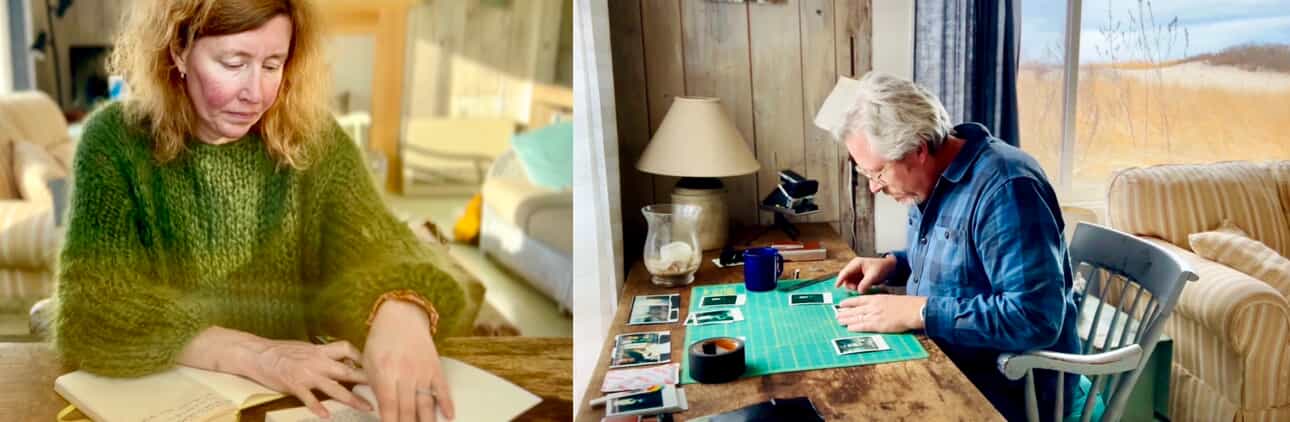
Excerpted from the EveNSteve film "A Week in the Icehouse" (2024)
INTRODUCTION
I was serving in the United States Marine Corps when I first picked up a camera, traveling the world through places like England, Spain, Norway, Dubai, and the Persian Gulf. I found myself moving constantly through landscapes I wanted to capture.
On a Friday afternoon, I bought a modest 35mm camera and started shooting immediately. By Monday morning, I was completely hooked. Photography wasn't just interesting; it felt necessary. Within days, I took out a large loan and purchased my first serious professional camera system. Looking back, it was a bold move, but it felt inevitable. I knew I had found something I wanted to pursue fully.
While still in the Marine Corps, I studied photography intensely on my own— reading, shooting, experimenting. But I knew I needed formal education. That realization led me to the Rochester Institute of Technology, where I earned a BFA in Photographic Arts and Sciences. RIT gave me a technical and conceptual foundation that shapes how I think about images, materials, and process to this day.
My wife, Eve O. Schaub, attended Cornell University, earning a dual degree in English literature and photography. She later completed her master's degree in photography at RIT, where we met— grounded in shared interests in photography, storytelling, and the ways images carry meaning.
After marrying, we moved to Vermont, where we've lived and worked for 29 years. In 2019, we teamed up as EveNSteve, creating photography-based mixed media works that incorporate words, phrases, and symbols. What began with a single camera and a sudden sense of urgency has grown into a lifelong commitment to image-making, storytelling, and the slow accumulation of meaning over time.
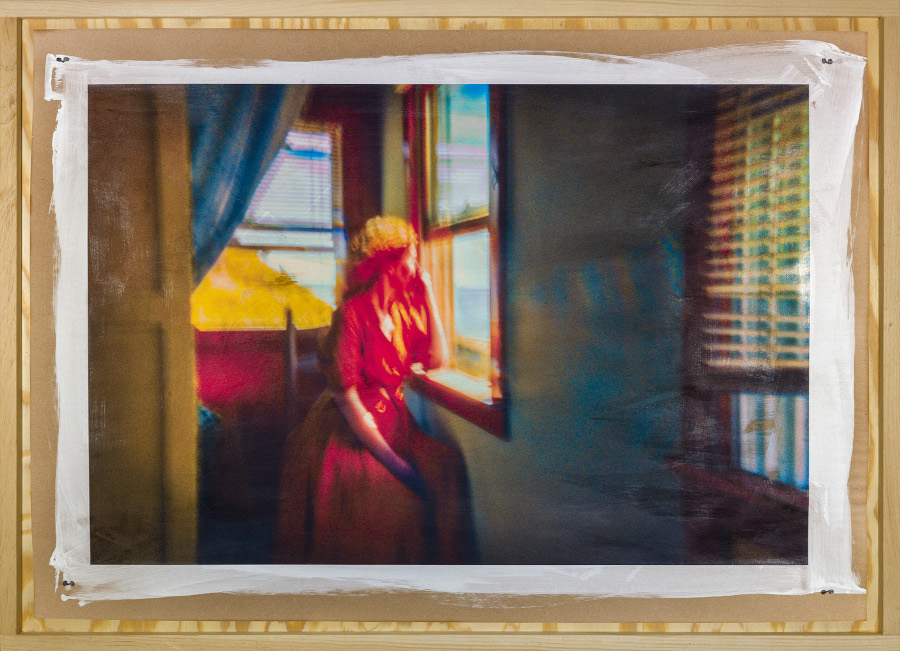
"There Are No Hints,"
Ink on hand coated brown paper bag with varnish and etched script
From the series "Tales of the Bittersweet." (framed 28.5" x 39") 2025.
Camera used: Leica M9
VISION & PROCESS
What draws you to the formats and processes you work with?
In almost all of our work, I think backwards. I envision the finished piece on the wall— its size, presence, the way it holds the room. I think about color, grain, and texture. Is it tight and precise, or loose and imperfect?
Once I have a sense of the final artwork, I work in reverse. What tools will get us there? Is this a piece that needs film or digital? What camera, format, or material will bring us closer to the feeling we're after? The equipment is never the starting point, but rather a response to an idea that already exists.
This way of working comes with a lot of failure— and I mean that in the best possible way. We often don't know exactly how a piece will come together. We're often inventing processes and formats as we go. Each new body of work requires its own set of rules, materials, and experiments.
Working this way keeps the process alive. Even after decades of making images, there are still elements I don't fully know or control, and I value that. Starting with a vision and moving backward— through trial, error, and reinvention— allows each piece to grow into something that feels genuinely new.
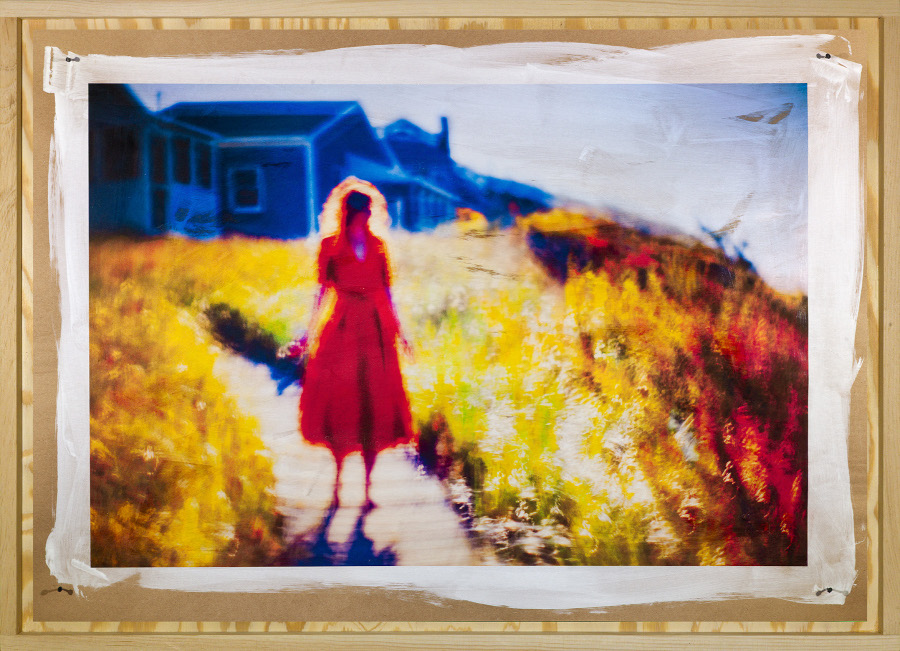
"Don't Bring Me Wine,"
Ink on hand coated brown paper bag with varnish and etched script
From the series "Tales of the Bittersweet." (framed 28.5" x 39") 2025.
Camera used: Leica M9
CURRENT WORK
Can you tell us about what you're currently working on?
Our most recent body of work, Tales of the Bittersweet, builds on the last three or four projects Eve and I have developed over the past five years, bringing together everything we've been exploring and pushing it further.
Visually, the work leans into a kind of beauty that feels almost excessive. We're working with long, handheld exposures and color palettes that feel closer to oil paintings than photographs. There's richness and softness, but also a tactile presence— something that asks to be experienced physically. The surfaces matter as much as the imagery.
Materially, we're using deconstructed brown paper bag material that's been hand-coated and built up in layers. Into those layers, we embed text — secret messages inscribed directly into the varnish. These inscriptions aren't immediately visible. You can stand in front of the piece and never notice them until light hits the surface at a very specific angle. Then, suddenly, the writing reveals itself, fleeting, like a whisper from within the artwork.
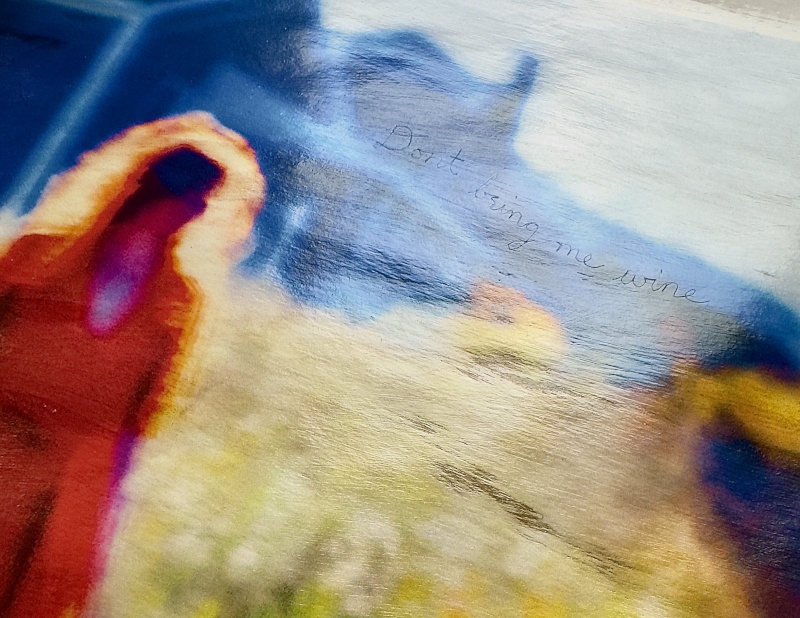
Surface detail from "Don't Bring Me Wine."
That moment of discovery is one of the things I love most. The work doesn't give itself up all at once. It rewards patience, presence, and chance. The writing is meant to be found almost accidentally, creating a private exchange between the piece and the viewer.
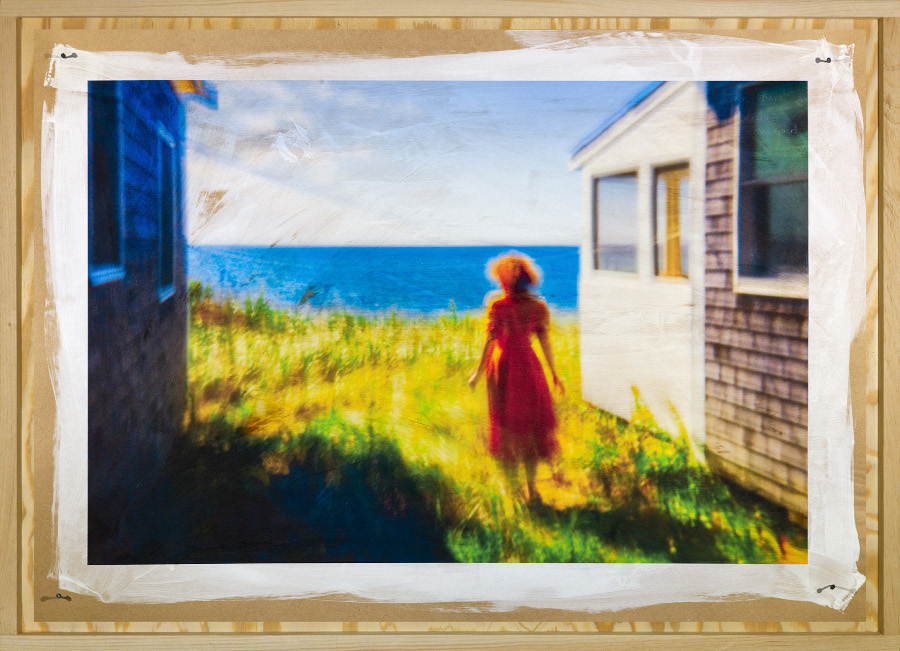
"Turn Three Times Around"
Ink on hand coated brown paper bag with varnish and etched script
From the series "Tales of the Bittersweet." (framed 28.5" x 39") 2025.
Camera used: Leica M9
For this work, I returned to digital using vintage Leica M9 cameras. I'm drawn to the robust, almost painterly color produced by the CCD sensor. That technical choice supports the emotional tone, which feels like modern fairy tales— lush, atmospheric, and inviting on the surface, but with a distinct pull toward the dark or uncanny. Tales of the Bittersweet lives in that tension, where beauty and unease quietly coexist.
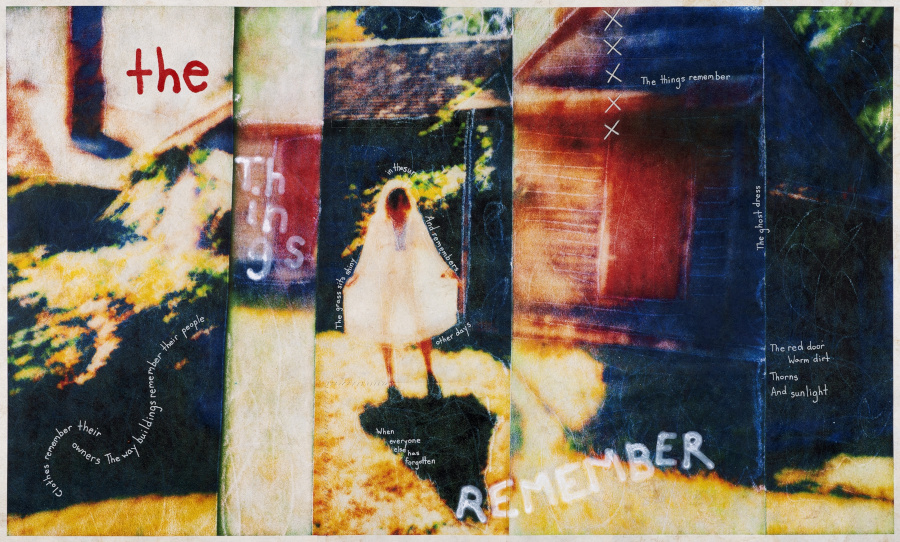
"Ghost Dress"
ink on handmade Amate paper with encaustic, mark-making, hand-written text, yarn and thread
From the series "Polaroid Stories." (46" x 70") 2023.
Cameras used: Polaroid i2 / Polaroid SX70
TOOLS & CREATIVE VISION
How do you approach the relationship between your tools and your creative vision?
Photographers tend to become obsessed with tools and equipment. I love cameras, but I'm always conscious of how easily technology can insert itself between the maker and the story. For me, the goal is to find tools that become transparent— where the camera disappears and what remains is a direct relationship with the subject and narrative.
That's why I'm drawn to simplicity. I've always loved classic film cameras from the 1920s, '30s, and '40s. There's an elegance to their limitations. My early Leica cameras embody that philosophy— they don't overwhelm you with choices; they ask you to slow down and make deliberate decisions.
I carry that mindset into digital photography. In Tales of the Bittersweet, I chose to use a Leica M9— a transitional object in photographic history. When it was released, Leica was easing film photographers into the digital world by keeping the camera's layout and feel deeply familiar.
The M9 is remarkably simple by today's standards. It lacks the layers of automation and computational intervention that define most contemporary cameras— and that's exactly what I value. It allows me to work intuitively.
Ultimately, the tools support the creative vision, not dictate it. I choose cameras and techniques that serve the work rather than compete with it. The focus returns to what matters most: the story, the image, and the quiet space where meaning can emerge.
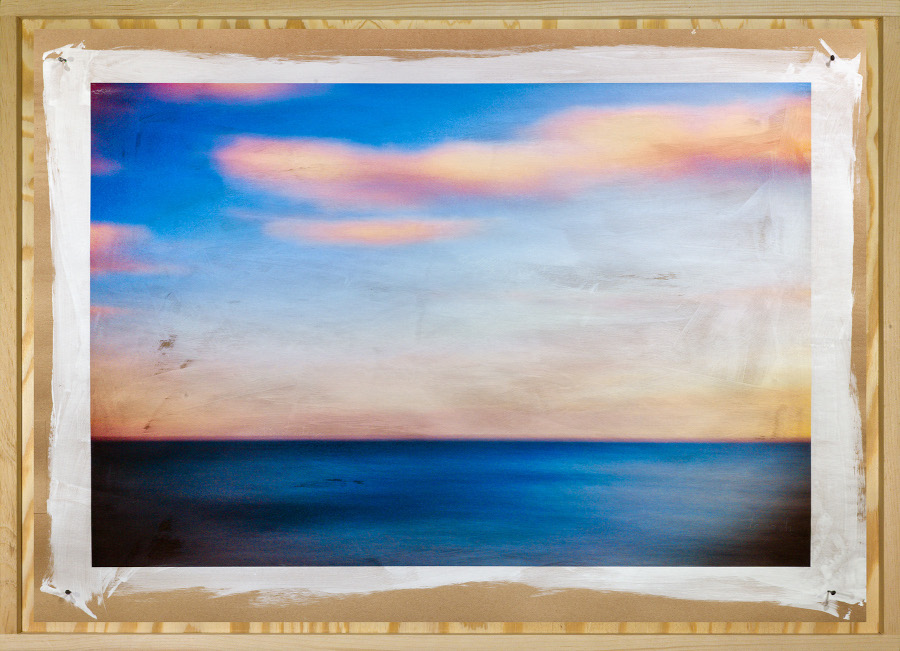
"Bring Out His Pipe,"
Ink on hand coated brown paper bag with varnish and etched script
From the series "Tales of the Bittersweet." (framed 28.5" x 39") 2025.
Camera used: Leica M9
COMMUNITY
What role does community play in your practice?
Community is complicated for us. We live in a beautiful but very small Vermont town— population just over a thousand. Our nearest neighbor is a quarter mile away. Most days it's just Eve and me working, thinking, and making together. Our daily community is often a community of two.
But in another sense, community is essential. The artists we stay connected with— whether through social media, email, or occasional visits— matter deeply. Those relationships, even when they exist primarily online, provide energy, challenge, and confirmation. They remind us we're not isolated in what we're trying to do.
I also teach photography workshops and online courses, which has become another form of community. Teaching keeps me engaged with other photographers at different stages of their practice. It pushes me to articulate ideas I might otherwise take for granted. In turn, that clarity feeds back into the studio.
There's also a historical community— the lineage of photographers, artists, and writers who have shaped how I think. I return to certain books, certain exhibitions, certain essays again and again. That ongoing conversation with the past is another kind of companionship.
So while we live and work in physical isolation, we're not creatively isolated. Community exists in layers. Some are local, some are distant. Some are living, some are historical. All of them contribute to the work in their own way.
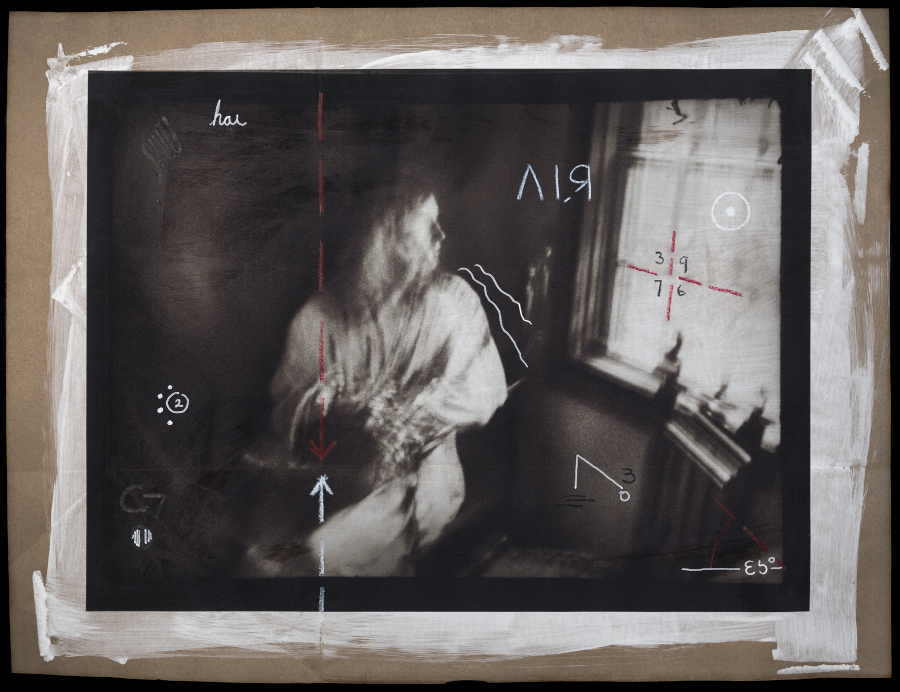
"^IR,"
pigment on hand-coated, deconstructed paper bag with mark-making
From the series The 1680 House. (15.5" x 20") 2025.
Camera used: 1939 Minox Riga subminiature.
INSPIRATION
Where do you find inspiration or what keeps you motivated to create?
Inspiration comes from a lot of places, but I'd say it's more about maintaining a state of attention than waiting for a lightning-strike moment. Eve and I are constantly looking— walking, reading, visiting exhibitions, watching films. We're absorbing imagery, language, texture, and rhythm all the time.
What keeps me motivated is curiosity and the simple fact that I need to make work. There's a compulsion underneath it all. I don't feel right if I'm not actively engaged in a project. It's not optional for me— it's deeply embedded in how I function.
The motivation also comes from the process itself. Each body of work brings new challenges, new materials, new ways of seeing. That's what sustains me over time. If I were repeating the same work year after year, I'd lose interest. But because we're constantly experimenting and evolving, there's always something pulling me forward.
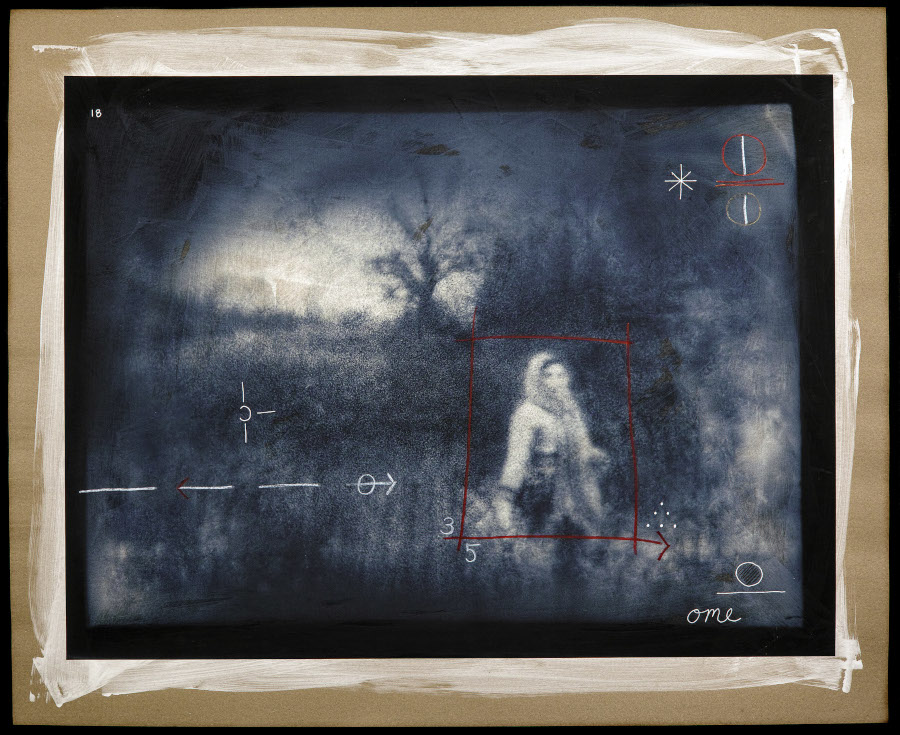
"ome,"
pigment on hand-coated, deconstructed paper bag with mark-making
From the series "The Nothing There Is." (26" x 32") 2025.
Camera used: 1939 Minox Riga subminiature.
ADVICE
What advice would you give to someone just starting to explore photography or mixed media?
Think in terms of the long haul. I was given that advice more than three decades ago by photographer William Clift, and he was absolutely right. What sustains a practice over time isn't a breakthrough moment— it's constancy.
It's the consistency of showing up. Of making work, sharing work, meeting people, and going back to make more work. Growth in art rarely happens in straight lines. It accumulates over years, through repetition and persistence.
If you're entering the arts expecting fame or recognition to arrive quickly, you're setting yourself up for frustration. The reality is that the best work often takes a long time to emerge. It needs room to develop, to deepen, and to mature alongside the artist.
At the core of it all, you have to be making art because you need to make art. It can't be optional. That drive has to come from somewhere deep. For me, I wake up in the morning and I have to make work. It's part of my DNA. Eve is the same way. That compulsion sustains you when external validation is absent or slow to arrive.
There's definitely an element of obsession, but it has to be paired with a long-term mindset, or else you'll burn out chasing quick results. Better to build steadily— through discipline, curiosity, and endurance. That's where real growth happens. Not overnight, but over decades. That's the model that leads to a practice that lasts, evolves, and remains meaningful over time.
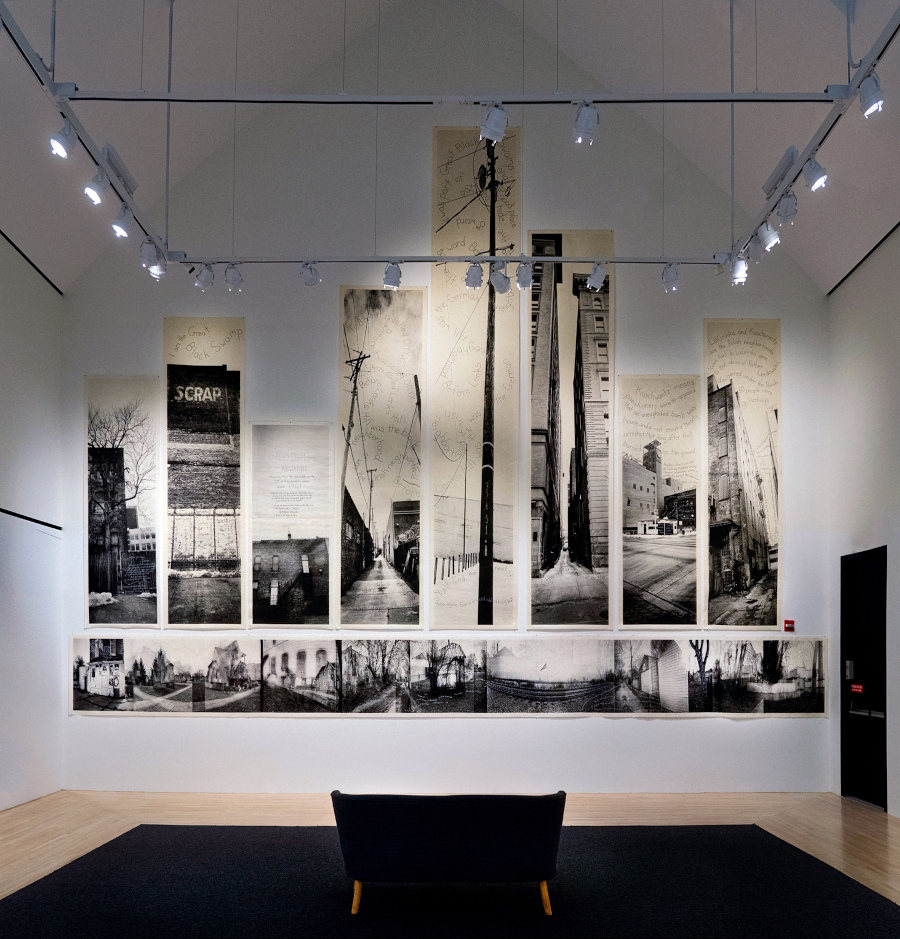
"Toledo is My Home,"
in-camera collage on film, pigment on Japanese Kinwashi with hand-inscribed text
(30' x 26') 2022. Pictured: installation view, Wilson Museum, Manchester Vermont.
Cameras used: Linhof 617S III / Noblex 150UX
FUTURE DREAMS
Where do you see your practice going? Any dreams or directions for the future?
Eve and I are genuinely excited about our practice right now. Over the past few years, we've produced several bodies of work that feel strong, cohesive, and deeply connected to who we are as artists. When I look ahead, I see the next five to ten years as a real expansion of creativity.
We're at a point where that kind of growth feels possible in a way it never quite did before. Our kids are young adults now, living their own lives. For the first time in more than twenty-five years, Eve and I have the flexibility to focus almost entirely on our artwork. That shift is profound.
I see a lot opening up for us. More artist residencies, more teaching opportunities— not just to share what we've learned, but to stay engaged, curious, and challenged. My teaching has always fed back into the studio in unexpected ways.
Exhibitions are also a big part of what we're looking toward. We want to show more, and show farther afield. For much of our life, our orbit has been tied to the East Coast. Now, that geography feels more flexible. I can see us working and exhibiting in places like Los Angeles, across Asia, and throughout Europe— expanding our physical footprint in ways that would have been difficult before.
What's exciting isn't just opportunity, but clarity. We know who we are as artists. We understand our rhythms, our processes, and our shared language. That allows us to move forward with confidence.
As for long-term dreams, they're surprisingly simple. I want to stay above ground. I want a long, healthy life with Eve, continuing to make artwork together, continuing to think, experiment, and build. After decades of balancing art with other demands, being able to devote ourselves more fully to our practice feels like a gift.
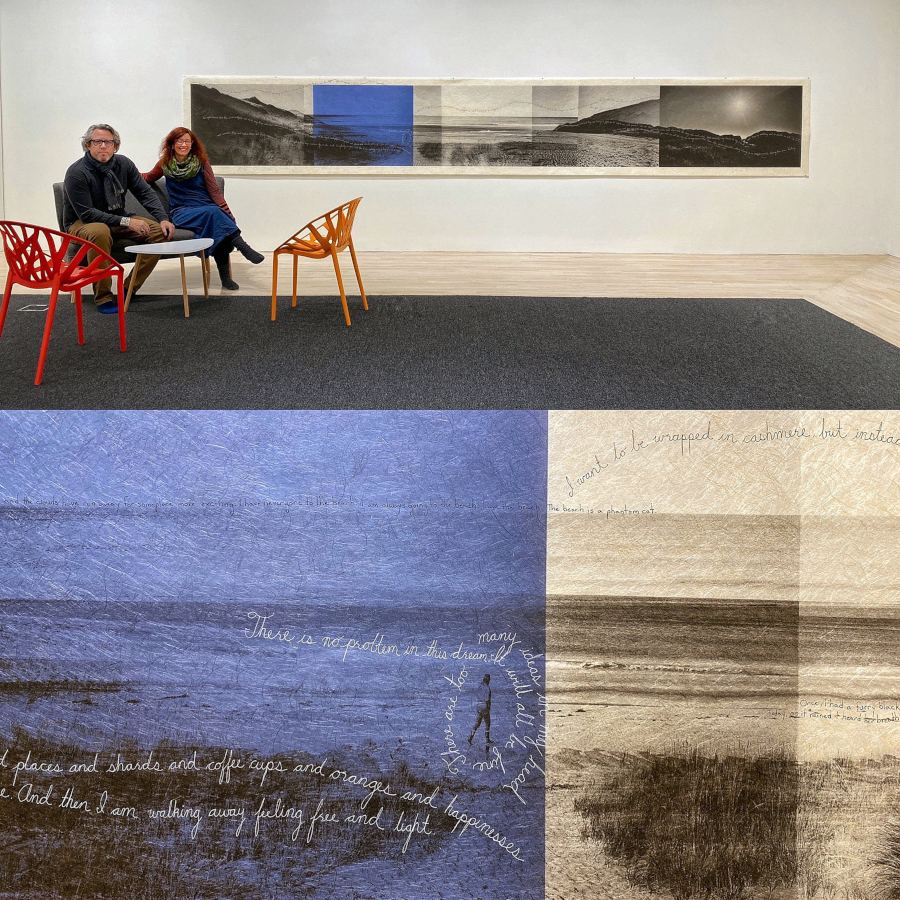
"My Phantom Cat,"
in-camera collage on film, pigment on Japanese Kinwashi with hand-inscribed text
(38" x 248") 2022. Pictured above: on display at the Wilson Museum, Manchester Vermont; below: detail.
Camera used: Linhof 612 PC
QUICK FIRE
Tea or coffee?
Definitely coffee.
Early bird or night owl?
Both— Eve is more night owl and I am the early bird!
Analog or digital?
Both… 80% analog, 20% digital… hybrid is really our approach.
Music or silence while you work?
Silence… or Jazz. Bill Evans is a favorite.
One book everyone should read?
Art & Fear by David Bayles and Ted Orland.
Best place you've ever worked/created?
Cape Cod in early fall. It's the light!
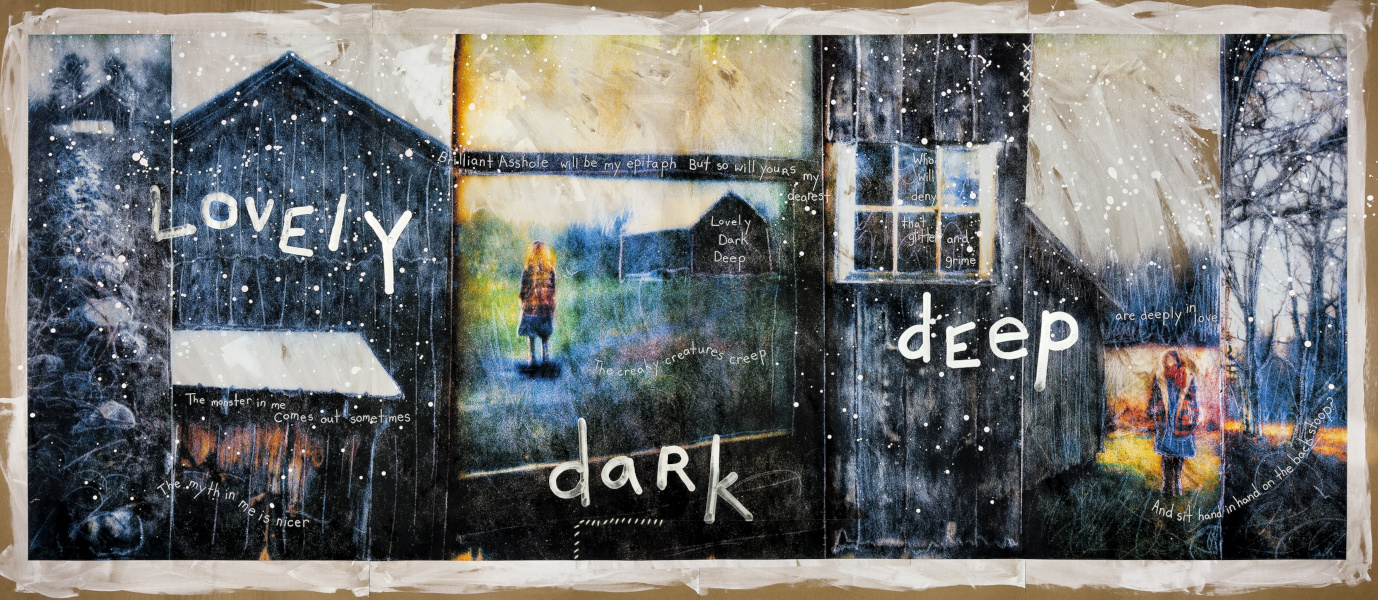
"Lovely Dark Deep"
ink on brown paper with encaustic, mark-making, hand-written text and yarn
From the series "Polaroid Stories." (40" x 89") 2024.
Camera used: modified Polaroid 680
A NOTE FROM LENS PUNK
I came across Steve's work a few years back, and we've been in conversation ever since. In that time, he's become a friend and unofficial mentor, which led to a collaboration where I built Steve a custom lens for his Leica rangefinder, which he further adapted for his recent work.
Steve's foundation is photographic arts, shaped by the Marine Corps, RIT, and a lifetime of image-making. My practice is rooted in woodcraft, with photography growing alongside it. Yet our approaches and interests cross in many ways.
Steve's approach combines experimental vision with methodical process. Collaborating with Eve— a photographer, artist and master of the written word— they blur the boundaries between photography, art, and craft, building surfaces that reveal themselves only at certain angles when viewed in physical form.
Despite coming from different places, getting to know Steve has been a gift. It's rare to find someone who shares such similar interests yet constantly surprises you with new perspectives.
Thank you EveNSteve. I look forward to continuing this conversation soon.
Connect with Stephen & EveNSteve
Website: EveNSteve.com
Instagram: @evensteveartists
Facebook: @evensteveartists
YouTube: The Figital Revolution